All Metal Detectors
Browse our complete collection of 38 metal detectors from the world's top brands. Compare prices, specs, and real user ratings to find your perfect match.
How to Choose a Metal Detector
Every detector in this catalog is built around four specs that actually determine how it performs in the field. Operating frequency (measured in kHz) trades sensitivity for depth - single low frequencies (5-8 kHz) favor large, deep targets like relics, high frequencies (15 kHz+) favor small or low-conductive targets like gold, and multi-frequency machines run several at once for all-purpose use. Ground balance cancels out mineral interference from soil so you only get alerts on real targets - automatic on beginner machines, manual or trackable on advanced ones for trashy or heavily mineralized sites. Waterproofing ranges from coil-only (fine for wet grass, not submersion) to full IP68 control-box sealing rated for the surf or shallow rivers. And discrimination is how the detector tells junk (nails, foil, pull tabs) from keepers (coins, rings, relics) - simple presets on entry-level units, fully adjustable target ID and iron audio on advanced ones.
As a rule of thumb: beginners do well under $300 with automatic ground balance and preset discrimination; $300-$600 is the sweet spot for hobbyists who want multi-frequency or adjustable settings; and $600+ is where full waterproofing, faster recovery speed, and pro-level target separation show up for serious or competitive detecting.
Want the full walkthrough?
Our complete buying guide covers frequency, ground balance, waterproofing, and discrimination in depth, plus how to match each spec to coin, relic, gold, or beach hunting.
Read the full "How to Choose a Metal Detector" guideSorted by Popularity

Garrett ACE 250
The Garrett ACE 250 delivers proven performance for beginners and hobbyists at an accessible price point. Its 12-segment target ID and 5 search modes make coin, jewelry, and relic hunting straightforward. The lightweight design and simple controls let you focus on finding treasure rather than learning complex settings.
Price may vary

Garrett ACE 300
Garrett's ACE 300 bridges the gap between toy detectors and serious machines with 0-99 Digital Target ID for accurate identification. Five preset search modes eliminate guesswork for new hunters, while the 7x10" DD coil provides solid depth. Made in USA with Garrett's proven reliability at an accessible price point.
Price may vary

Fisher F22
Fisher's weatherproof entry-level detector with numeric Target ID for easier identification. The Iron Audio feature lets you hear iron signals for better discrimination decisions. Runs on 2 AA batteries for 25+ hours, making it practical for day-long hunts without worrying about recharging.
Price may vary
Fisher F2
Fisher's most affordable detector strips detecting down to the essentials. Simple turn-on-and-go operation with basic discrimination makes it ideal for absolute beginners or as a backup machine. The 7.8 kHz frequency handles coins and jewelry in typical park conditions.
No longer sold new on Amazon

Minelab Equinox 800
The Equinox 800 revolutionized detecting by making simultaneous multi-frequency affordable. It runs 5, 10, 15, and 20 kHz at once for consistent performance across target types and ground conditions. Eight customizable profiles let you dial in settings for coins, relics, beach, or gold—then save them for instant recall.
No longer sold new on Amazon

Garrett ACE 400
The ACE 400 hits the sweet spot in Garrett's lineup with a 0-99 Digital Target ID scale and adjustable frequency that helps reduce interference. Iron Audio lets you hear masked iron targets, preventing false digs. The included 8.5x11" DD coil covers ground efficiently while the USA-made build quality ensures years of reliable use.
Price may vary

Garrett AT Pro
The AT Pro set the standard for waterproof VLF detectors with 10-foot submersion rating and 15 kHz frequency optimized for coins and jewelry. Pro Audio modes provide nuanced target information that experienced hunters appreciate. Manual ground balance handles beach mineralization that trips up preset-only machines.
Price may vary
Garrett ATX
The ATX uses pulse induction technology that ignores ground mineralization—essential for gold prospecting and saltwater beaches. Military-spec construction survives harsh conditions, and the collapsible design packs into remote locations. Fully waterproof to 10 feet for underwater prospecting in rivers and streams.
No longer sold new on Amazon

Minelab X-Terra Pro
The X-Terra Pro delivers full IP68 waterproofing with Multi-IQ+ at a mid-range price. Pro-Switch audio lets you toggle between modes without menu diving, and both single and multi-frequency options give flexibility for different targets. Lightweight at 2.47 lbs, it swings easy during long sessions.
Price may vary

Garrett AT Max
The AT Max adds Z-Lynk wireless technology with just 17ms latency—fast enough that audio feels instantaneous. True All-Metal mode bypasses discrimination for maximum depth on deep targets. Enhanced ground balance tracking and backlit display make it the most capable AT series detector for challenging conditions.
Price may vary

Garrett ACE 200
Garrett's most affordable ACE strips detecting to essentials with just 3 search modes and graphic Target ID. The 6.5 kHz frequency finds coins reliably, and up to 40 hours of battery life means more hunting between changes. Made in USA with Garrett's backing—a solid first detector.
Price may vary

Minelab Vanquish 340
The Vanquish 340 delivers Multi-IQ multi-frequency technology under $200—previously impossible. At just 2.4 lbs with simple 3-mode operation, it's ideal for kids and complete beginners who want Minelab quality. The smaller coil maneuvers easily in tight spaces and brushy areas.
Price may vary

Fisher F44
The Fisher F44 stands out as a weatherproof all-rounder with manual ground balance—a feature rarely found at this price. Its 11-inch DD coil provides excellent coverage, while the Fe-Tone iron audio helps you distinguish junk from valuable targets. Perfect for parks, fields, and light beach hunting.
Price may vary

Fisher Gold Bug 2
The Gold Bug 2's legendary 71 kHz frequency makes it exceptionally sensitive to small gold—often detecting sub-gram pieces that lower-frequency detectors miss entirely. The hip-mount option reduces arm fatigue during long prospecting sessions, and the analog controls respond instantly without menu diving. A VLF workhorse for nugget hunters on a budget.
Price may vary

Fisher Gold Bug Pro
The Gold Bug Pro's 19 kHz frequency hits the sweet spot for small gold and jewelry, while the Ground Grab feature makes balancing mineralized soil quick and simple. At just 2.5 lbs, it's one of the lightest gold detectors available. V-Break discrimination helps separate gold from iron trash in relic-strewn areas.
No longer sold new on Amazon

Fisher Gold Bug
The original Gold Bug offers the core prospecting features of the Gold Bug Pro at a lower price point. The 19 kHz frequency provides good sensitivity to small gold, and the lightweight design minimizes fatigue on the goldfields. A solid entry into dedicated gold hunting.
Price may vary

Garrett AT Gold
Garrett combined their proven AT waterproof platform with an 18 kHz frequency tuned for gold prospecting. Fully submersible to 10 feet, it handles stream and river hunting where gold often settles. The True All-Metal mode provides maximum depth, while Iron Audio helps distinguish gold from mineralization noise.
Price may vary

Minelab Manticore
Minelab's Manticore represents the cutting edge with 2D target visualization that plots both conductivity and ferrous content simultaneously. The enhanced Multi-IQ+ processor handles complex ground conditions while IP68 waterproofing to 5 meters opens up underwater hunting. High-speed target separation catches coins masked by nearby iron.
Price may vary

Minelab Equinox 900
The Equinox 900 refines the 800's formula with Multi-IQ 2 for improved target ID stability and deeper detection. The Control Pod moves key settings to your fingertips, and 5-meter waterproofing extends dive capability. Six single frequencies give more options for optimizing to specific targets or conditions.
Price may vary

Nokta Simplex+
The Simplex+ redefined value by offering IP68 waterproofing to 3 meters at a budget price point. Built-in rechargeable battery eliminates ongoing costs, and wireless headphone support keeps you cord-free. Nokta's free firmware updates add features over time—a rarity at this price.
Price may vary

Minelab Vanquish 540
The Vanquish 540 tops Minelab's entry line with a larger 12x9" coil for better coverage and depth. Six detect modes including All Metal give more flexibility than the 440, and adjustable Iron Bias helps in trashy parks. Multi-IQ handles beach and field with equal capability.
Price may vary

Nokta Simplex Ultra
The Simplex Ultra upgrades the beloved Simplex+ with simultaneous multi-frequency and more single-frequency options. Still maintains the original's simplicity and IP68 waterproofing while adding serious capability. The rechargeable battery and included wireless headphones make it hunt-ready out of the box.
Price may vary
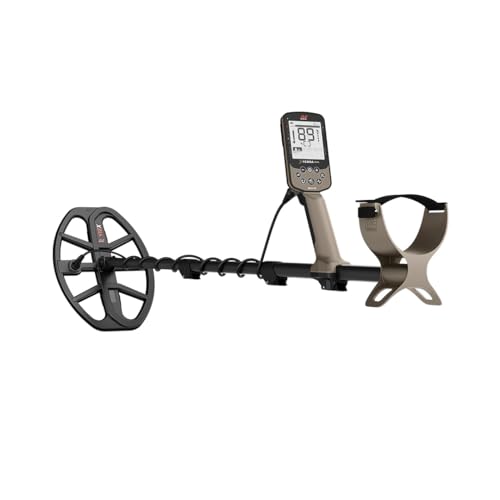
Minelab X-Terra Elite
The X-Terra Elite packs Multi-IQ+ technology into a lightweight, AA-battery-powered package. Six single frequencies plus multi-frequency mode give you flexibility for any target type. Pro-Switch lets you toggle between profiles on the fly, and IP68 rating means full waterproofing without the weight of rechargeable batteries.
Price may vary

Fisher F75
The F75 earned its reputation among relic hunters with fast target response and excellent iron separation. The dual-filter discrimination system helps pull good targets from iron-infested sites. Lightweight at 3.5 lbs with exceptional balance, it remains comfortable during long hunts on Civil War sites and old homesteads.
No longer sold new on Amazon

Minelab Vanquish 440
The Vanquish 440 brings Minelab's Multi-IQ technology to budget-conscious hunters. It runs multiple frequencies simultaneously—the same core technology as Equinox—without the complexity. At 2.6 lbs with AA battery power, it's practical for extended hunts and requires no ground balance adjustment.
No longer sold new on Amazon

Garrett Apex
The Apex brings Garrett's Multi-Flex frequency technology to a competitive price point. Switch between 5, 10, 15, 20 kHz or run them simultaneously for different target types. Z-Lynk wireless headphones come included—an accessory that costs $150+ separately with other brands.
Price may vary

Minelab Gold Monster 1000
The Gold Monster 1000 simplifies gold prospecting with fully automatic operation—no ground balancing or sensitivity adjustments needed. Its 45 kHz frequency excels at finding small gold in mineralized soil, while the Gold Chance Indicator tells you when conditions favor gold detection. Perfect for prospectors who want to spend less time tweaking settings and more time finding gold.
Price may vary

Nokta Legend
The Legend disrupted the market by offering simultaneous multi-frequency (SMF) at half the price of competitors. With IP68 waterproofing to 3 meters, Bluetooth aptX audio, and free firmware updates, it delivers flagship features without the flagship price. Six single-frequency options let you optimize for coins, relics, or gold hunting.
Price may vary

Minelab Equinox 700
The Equinox 700 introduces Multi-IQ 2 with improved target ID accuracy and deeper detection. The Control Pod display moves key info to the handgrip, and haptic vibration feedback helps in noisy environments. Waterproof to 5 meters—deeper than its predecessor—for serious underwater hunting.
Price may vary

Minelab Excalibur II
The Excalibur II remains the go-to detector for serious underwater hunters thanks to its 200-foot depth rating and BBS multi-frequency technology. It handles saltwater mineralization that defeats single-frequency machines, making it equally capable on wet sand, in the surf, or on scuba dives. A proven design that underwater hunters trust.
Price may vary

Minelab Equinox 600
The Equinox 600 brought Minelab's Multi-IQ simultaneous multi-frequency technology to a wider audience. Waterproof to 3 meters with excellent target separation, it handles parks, beaches, and fields with equal confidence. Four detect modes cover most hunting scenarios out of the box.
No longer sold new on Amazon

Nokta Triple Score
Nokta's flagship Triple Score offers five single frequencies plus SMF multi-frequency for ultimate versatility. The large screen displays 2D target analysis similar to high-end Minelabs, while the included wireless headphones and 13x11" coil eliminate extra purchases. A complete package ready for serious detecting.
Price may vary

Minelab CTX 3030
The CTX 3030 remains Minelab's ultimate coin and relic hunter with FBS 2 spanning 1.5 to 100 kHz simultaneously. GPS mapping logs your finds and helps you cover ground systematically. Target Trace shows target movement in real-time, reducing dig time. Heavy but unmatched for serious site hunting.
Price may vary
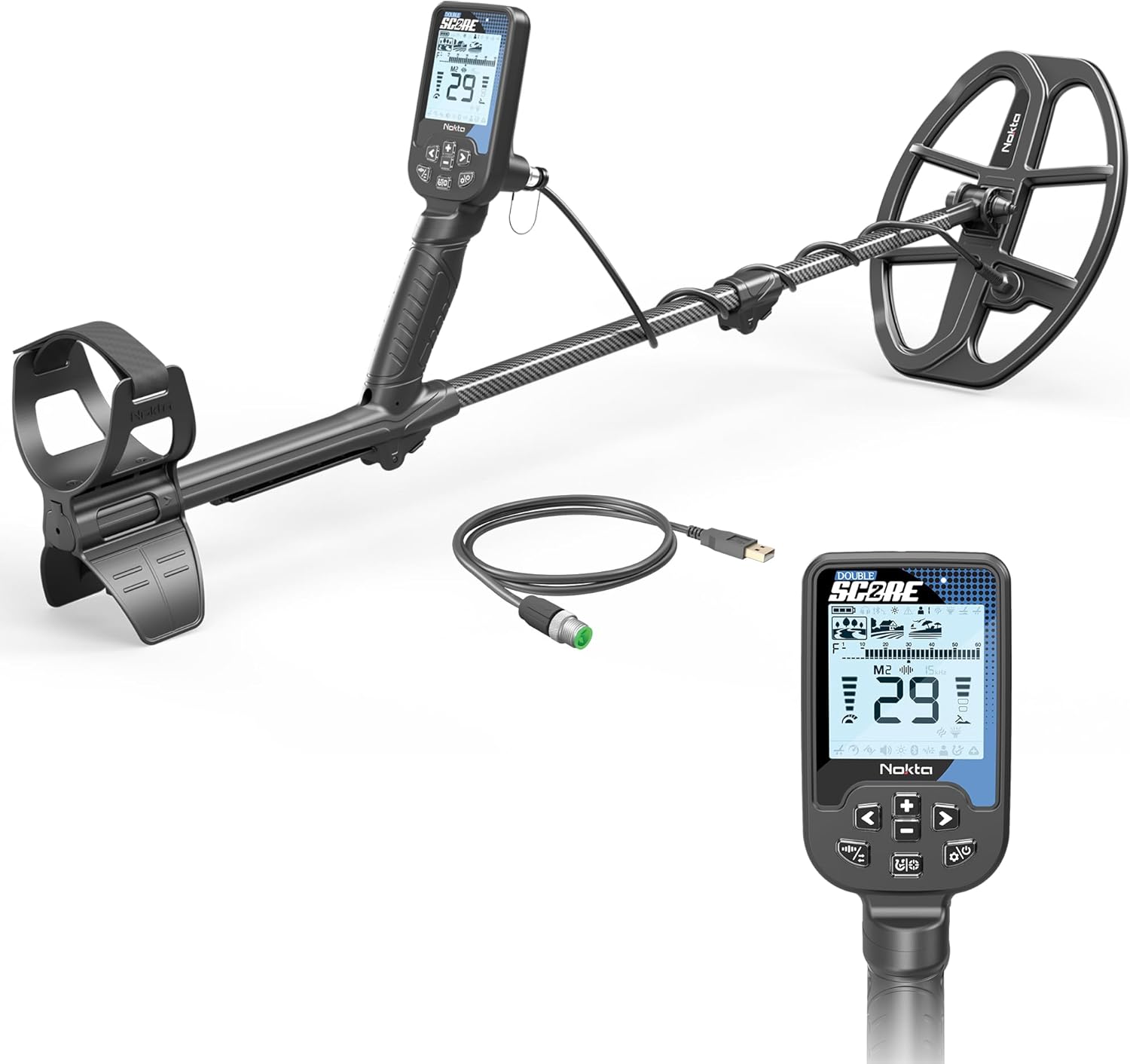
Nokta Score
The Score brings Nokta's SMF multi-frequency technology to an entry-level price point. Waterproof to 5 meters with wireless audio capability, it punches well above its weight class. Simple controls make it accessible for beginners while the technology handles difficult ground automatically.
Price may vary

Garrett Axiom
Garrett's entry into serious gold prospecting, the Axiom uses Pulse Induction technology optimized for mineralized ground. The TERRA-SCAN dual-channel ground balance handles hot rocks and variable soils that trip up VLF detectors. Lightweight for a PI machine, making it suitable for long prospecting sessions.
Price may vary

Nokta Double Score
The Double Score sits in Nokta's mid-range, offering SMF plus individual frequency selection for target-specific hunting. The larger 11x7" DD coil provides better ground coverage than the base Score, and the included wireless headphones add real value to the package.
Price may vary

Minelab GPZ 7000
Minelab's flagship gold detector, the GPZ 7000 uses proprietary ZVT (Zero Voltage Transmission) technology that outperforms both VLF and traditional PI machines. The Super-D coil configuration reduces ground noise while maintaining sensitivity to sub-gram gold. Built-in GPS tracks your finds, and wireless audio keeps you tangle-free. At $9,500, it's an investment for serious prospectors who've already worked out their claims.
Price may vary

Minelab GPX 6000
The GPX 6000 cut the weight of serious gold prospecting nearly in half compared to the GPX 5000. GeoSense-PI technology automatically tracks ground changes, letting you focus on listening rather than adjusting. Two coils included—14" mono for depth and 11" DD for separation in trashy ground.
Price may vary
How to Choose the Right Metal Detector
For Beginners
Start with an entry-level detector under $300. Look for simple controls, preset search modes, and good discrimination. The Garrett ACE series and Nokta Simplex are excellent choices.
See Best Beginner Detectors →🏖️For Beach Hunting
Saltwater requires special capabilities. Choose a waterproof detector with multi-frequency technology or pulse induction. The Minelab Equinox series excels in saltwater conditions.
See Best Beach Detectors →✨For Gold Prospecting
Gold nuggets require high-frequency sensitivity (45+ kHz) or pulse induction technology. The Minelab Gold Monster 1000 and Fisher Gold Bug are popular choices for nugget hunting.
See Best Gold Detectors →💰Best Value Options
The sweet spot for most hobbyists is $300-$600. In this range, you get advanced features without professional prices. Multi-frequency technology is available in this bracket.
See Best Value Detectors →Need Help Deciding?
Use our comparison tool to see two detectors side-by-side, or browse our buying guides for detailed recommendations based on your hunting style.
Metal Detector FAQ
How much should I spend on a metal detector?
Budget $150-$300 for a solid beginner machine with preset modes and automatic ground balance - plenty to start finding coins and jewelry. $300-$600 buys a mid-range detector with multi-frequency or adjustable discrimination, the sweet spot for most hobbyists. $600-$1,000 and up gets you full waterproofing, faster recovery speed, and pro-level target separation for serious or competitive detecting.
What is the difference between VLF and PI detectors?
VLF (Very Low Frequency) detectors are the standard choice for coins, jewelry, and relics - they read target size and composition, so they can discriminate junk from good targets. PI (Pulse Induction) detectors ignore discrimination and push depth instead, which is why they're favored for gold prospecting and heavily mineralized ground where VLF machines struggle. In our catalog, the Garrett Axiom and ATX and the Minelab GPX 6000 are PI machines built specifically for that use case.
Do I need a waterproof detector?
Only if you're hunting wet sand, the surf line, or shallow water. A coil-only or weatherproof detector is fine for parks, fields, and dry beach sand, but the control box isn't sealed, so it can't go under water. If beach or underwater hunting is the plan, look for an IP68-rated model built for full submersion, not just a submersible search coil.
What does ground balance do, and do I need to adjust it myself?
Ground balance tunes out mineral interference from the soil itself (iron, salt, or wet sand) so the detector only alerts on real targets. Entry-level machines handle this automatically; mid-range and advanced detectors usually add a manual or tracking mode so you can fine-tune it for trashy or highly mineralized ground.